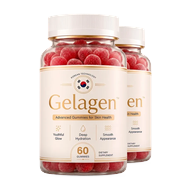
On the panel
Vitamin A — 630 mcg
The most studied molecule in skin science, and the one figure here with a real ceiling.
What It Is
Vitamin A is the most heavily studied nutrient in skin science, and its active form behaves less like a nutrient than like a hormone. Retinoic acid binds nuclear receptors sitting directly on DNA and switches entire gene programmes on and off.
Food delivers it in two quite different shapes. The preformed group, retinol and the esters built from it, arrives through animal foods and is put straight to work. Provitamin A carotenoids such as beta-carotene come from plants and are converted at a rate your body controls. That distinction is not academic; it is the whole of the safety story.
What It Actually Does
Three jobs, described without the marketing vocabulary.
It directs how a skin cell matures
The genes retinoic acid governs in skin decide how a keratinocyte matures on its journey from the basal layer to the surface. This is why the retinoid family sits at the centre of dermatology, and why deficiency produces characteristically rough, dry, bumpy skin.
It influences sebum and follicles
Retinoids alter sebum production and how the lining of a follicle behaves, which is the mechanism behind their use in acne. That is a prescription-strength mechanism rather than a nutritional one, and the two should not be confused.
And, for completeness, vision
Retinal is the light-sensitive molecule in the retina, and night blindness is the earliest sign of deficiency worldwide. It is not why vitamin A is on this panel, but it is worth knowing what else the nutrient does.

630 mcg In Every Serving
Our serving carries 630 mcg. The adult recommendation is roughly 700 to 900 mcg a day and the upper limit for preformed vitamin A is 3000 mcg, so this is a full contribution sitting comfortably inside the ceiling on its own — and it is the one figure here where what you take alongside it genuinely matters.
Converted to retinoic acid, vitamin A stops behaving like a nutrient and starts behaving like a hormone: it binds receptors sitting on DNA and switches whole gene programmes on and off. In skin those programmes decide how a keratinocyte matures on its journey upward. It is also the reason this product is not for anyone who is pregnant.
Who Tends To Fall Short
Deficiency is rare in wealthy countries and devastating where it is common. Vision at dusk goes first, the surface of the eye dries next, and corneal damage follows. On skin it shows as phrynoderma, a coarse thickening around the follicles that older texts call toad skin.
Where it does occur in developed countries it is nearly always secondary to fat malabsorption, since vitamin A cannot be absorbed without dietary fat.
Where It Turns Up In Food
| Source | Roughly | Notes |
|---|---|---|
| Beef liver | Over 6000 mcg per 75 g | Enormous, which is why liver is restricted in pregnancy |
| Sweet potato | ~960 mcg RAE per half cup | Carotenoid form, self-limiting |
| Cooked spinach | ~470 mcg RAE per half cup | Dense and reliable |
| Carrots | ~460 mcg RAE per half cup | The famous one |
| Butter and cheese | 50–100 mcg a serving | Preformed, and it counts toward the ceiling |
| Eggs | ~75 mcg each | Preformed, modest |
The Ceiling, And The Cautions
This is the most important caution on the entire panel. Preformed vitamin A is fat soluble, stored in the liver, and carries a real upper limit of 3000 mcg a day for adults. Chronically exceeding it causes headaches, hair loss, bone pain, liver damage and dry cracked skin — several of which are the opposite of what anybody taking this is hoping for.
In pregnancy it is more serious again. A large preformed vitamin A intake in the opening weeks of a pregnancy is teratogenic — it is capable of causing birth defects. If you are pregnant, might be pregnant, are breastfeeding or are trying to conceive, do not take Gelagen without your doctor's approval.
Have that same conversation if a multivitamin in your cupboard carries vitamin A, if isotretinoin or acitretin has been prescribed to you, or if liver is a regular part of your week. Beta-carotene from vegetables is not part of this problem, because conversion is regulated, but preformed vitamin A from every supplement and animal source adds up.
Where This Comes From
- Retinoic acid acts through nuclear receptors that regulate transcription directly.
- The 3000 mcg upper limit applies to preformed vitamin A, not to provitamin A carotenoids.
- Teratogenicity of high preformed vitamin A intake in early pregnancy is the reason liver is restricted in antenatal advice.
General nutritional science rather than claims about this product. Nothing on this page is medical advice; see our disclaimer.
Vitamin A Questions
What we get asked about this line of the label specifically.
Is 630 mcg safe?
Standing alone, the figure leaves a wide margin beneath the 3000 mcg adult limit. The risk is arithmetic: adding a multivitamin, a separate vitamin A supplement or a prescription retinoid is how people exceed it without noticing.
Can I take it during pregnancy?
Not without your doctor's approval. This is the clearest contraindication on the label and we repeat it on every relevant page for that reason.
Is swallowing it the same as using a retinol cream?
No. A topical retinoid acts directly on the skin it is applied to at concentrations a nutritional amount never approaches. If you use one, tell your prescriber you also take dietary vitamin A.
Does beta-carotene count toward the ceiling?
No. Conversion from carotenoids is regulated by your body, which is why you cannot reach toxicity from carrots. Eat enough of them and your palms take on an orange tint, which does no damage and fades again.